
Treatment in California
Drug Rehab for Teens in California
If your teen is struggling with substance abuse, early intervention is key. Contact us today to learn more about our specialized programs and take the first step toward a brighter, healthier future.
Learn more about our teen addiction treatment or call us now at 877-983-5144.
About Teen Drug Addiction
Teen drug addiction is a growing concern that affects not only the individual but also their family, friendships, and future opportunities. Adolescence is a time of rapid development and emotional exploration, making teens particularly vulnerable to the influences of peer pressure, academic stress, mental health struggles, and social media exposure. Some teens experiment with substances out of curiosity, while others turn to drugs as a way to cope with anxiety, depression, trauma, or low self-esteem.
What may start as occasional use can quickly spiral into dependency. The teenage brain is still developing, particularly in areas responsible for decision-making and impulse control. This makes adolescents more susceptible to addiction, as their brains adapt to the effects of substances more rapidly than adults. Over time, drug use can lead to lasting changes in brain chemistry, increasing the risk of chronic substance use disorders and co-occurring mental health conditions.
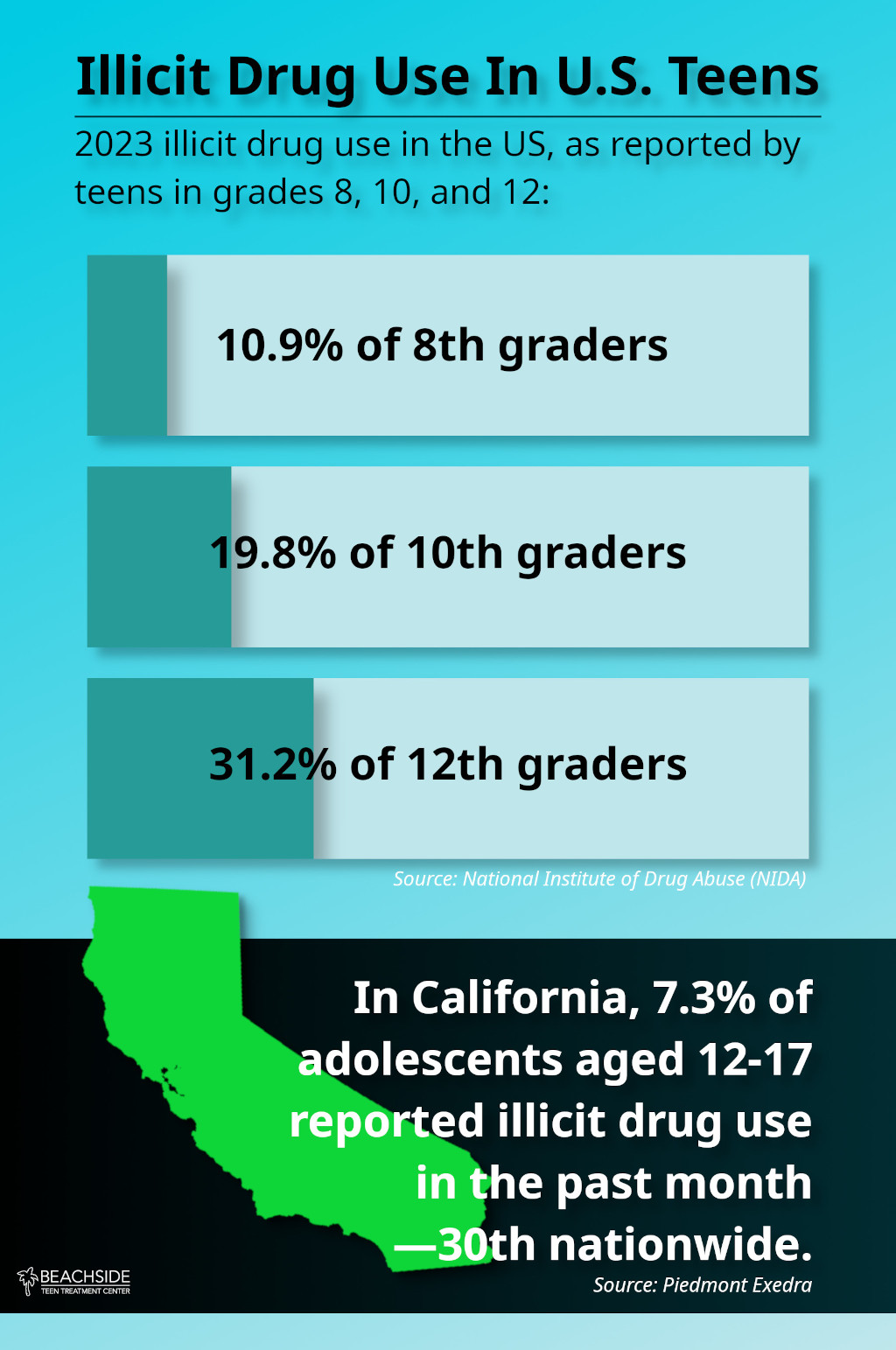
Nationally, the percentage of adolescents reporting illicit drug use has decreased. In 2023, approximately 10.9% of 8th graders, 19.8% of 10th graders, and 31.2% of 12th graders reported using any illicit drug in the past year, continuing a trend of lower usage since the onset of the COVID-19 pandemic.
In California, an estimated 7.3% of teens aged 12 to 17 reported using an illicit drug in the past month, positioning the state at 30th nationwide for teen drug use.
How Do I Know If My Teen Is Using Drugs?
Recognizing the signs of drug use in your teenager can be challenging, as adolescence naturally comes with mood swings, a desire for independence, and evolving social circles. However, when these changes seem sudden, extreme, or accompanied by other concerning behaviors, they may indicate substance use. Being aware of early warning signs can help parents intervene before experimentation turns into addiction.
- Behavioral Changes: If your teen becomes increasingly secretive, isolates themselves from family, or suddenly changes their group of friends, it could be cause for concern. Other red flags include skipping school, falling grades, or losing interest in once-enjoyed activities.
- Physical Symptoms: Frequent bloodshot eyes, dilated or constricted pupils, unexplained weight loss or gain, extreme fatigue, or a decline in personal hygiene can all be indicators of substance use.
- Emotional Signs: Increased irritability, uncharacteristic mood swings, heightened anxiety, or symptoms of depression may suggest that your teen is struggling and possibly self-medicating with drugs.
Signs and Symptoms of Teen Drug Abuse
Understanding the specific signs of drug abuse can aid in early intervention. While experimentation and peer influence are common during adolescence, repeated or frequent drug use can lead to dependency.
Some warning signs include:
- Changes in Social Circles: A sudden shift in friendships, especially if your teen starts associating with peers known for risky behaviors or isolating themselves from longtime friends and family.
- Loss of Interest: A noticeable decline in motivation for hobbies, sports, academics, or activities that once brought them joy. Neglecting responsibilities or abandoning commitments can be an early indicator of drug use.
- Financial Irregularities: Unexplained need for money, frequently asking for cash without a clear reason, or missing valuables from the home could suggest drug-related spending.
- Physical Evidence: Finding drug paraphernalia (such as rolling papers, pipes, or pill bottles), noticing unusual odors on clothing or in their room, or discovering hidden substances are strong indicators that intervention is necessary.
Types of Drug Addictions We Treat
Alcohol Addiction
Alcohol remains one of the most commonly abused substances among teens. Our teen alcohol rehab focuses on helping adolescents understand the risks associated with alcohol use and developing coping strategies to resist peer pressure.
Marijuana Use
With the increasing legalization and availability of marijuana, many teens underestimate its potential for dependency. Our treatment addresses both the psychological and physical aspects of marijuana use, promoting healthier alternatives.
Prescription Drug Abuse
Misuse of prescription medications, such as opioids and stimulants, has seen a troubling rise among teenagers. Our approach includes medical supervision for withdrawal symptoms and therapy to uncover underlying issues leading to misuse.
Illicit Drug Use
For teens involved with substances like cocaine, methamphetamine, or hallucinogens, our intensive program combines medical care with behavioral therapies to address the multifaceted nature of illicit drug addiction.




Teen Drug Rehab Programs in California
At Beachside Teen Treatment Center, we recognize that no two teens experience addiction the same way. Each adolescent’s journey to recovery is unique, which is why we offer multiple levels of care tailored to meet their specific needs. Whether a teen requires round-the-clock support or a more flexible outpatient approach, our programs provide a safe, structured environment to help them heal.
Residential
Treatment
Our residential treatment program is designed for teens who require intensive, 24/7 support in a structured and nurturing environment. This level of care is ideal for adolescents struggling with severe substance use, co-occurring mental health conditions, or those who have experienced multiple relapses.
During their stay, teens participate in daily therapy sessions, including individual counseling, group therapy, and family therapy, to address the root causes of their substance use. Additionally, they engage in structured activities such as mindfulness exercises, recreational therapy, and academic support to promote personal growth and resilience.
Therapeutic Education
Program
It’s important for adolescents to continue their education with minimal disruption while attending long-term, intensive treatment. However, due to behavioral and emotional issues, they may need additional support to thrive in academics. Our therapeutic education program ensures that kids don’t fall behind in their studies during treatment.
Our therapeutic education program focuses not only on academics but self-advocacy, self-confidence, empowerment, and emotional well-being. Our program offers small class sizes led by teachers and supported by therapists, to ensure that teens are seen and supported.
Aftercare
Program
Aftercare is a critical aspect of long-term recovery from mental health disorders and addiction. For teens, aftercare support helps them move forward in life after completing intensive treatment. That way, they receive continuing support and resources to help them succeed as they enter young adulthood.
Our aftercare program helps your teen stay connected to the recovery community while also getting support and learning new skills to cope with the life stressors that accompany adolescence and young adulthood. This also encourages teens to continue seeking peer support outside of treatment programs, such as 12-step recovery groups.
How Is Drug Addiction Treated at Beachside?
Behavioral
Therapy
Behavioral therapy focuses on identifying and modifying negative thought patterns and behaviors that contribute to substance use. Teens learn healthy coping mechanisms, relapse prevention strategies, and ways to develop more positive responses to stress and emotional challenges.
Cognitive-Behavioral
Therapy (CBT)
Cognitive-behavioral therapy (CBT) is one of the most common types of therapy that treats several mental and behavioral health issues. CBT helps teens challenge the negative thought patterns and beliefs that often lead to poor behavioral and emotional health.
Dialectical Behavioral
Therapy (DBT)
Developed specifically for borderline personality disorder (BPD), dialectical behavioral therapy (DBT) is a type of behavioral therapy that focuses on improving skills in four areas critical to your teen’s emotional well-being: (1) interpersonal effectiveness, (2) emotion regulation, (3) distress tolerance, and (4) mindfulness.
Psychodynamic
Therapy
Psychodynamic therapy helps teens explore underlying emotional conflicts and past experiences that may be contributing to their substance use. By uncovering these hidden influences, adolescents can develop greater self-awareness and healthier ways to process emotions.
Psychiatric
Care
Psychiatric care is vital to any adolescent with behavioral, emotional, and mental health disorders. Our psychiatrists review your teen’s behavioral patterns and psychological history for an accurate diagnosis. They may also prescribe medications to treat some of their symptoms.
Equine
Therapy
Equine therapy involves working with horses to build trust, communication, and emotional regulation skills. This experiential therapy, also called animal-assisted therapy (AAT) helps teens develop confidence, accountability, and a sense of responsibility—all of which support their recovery journey.
Interpersonal
Therapy
Interpersonal therapy (IPT) helps teens improve their relationships and communication skills, which can be essential in preventing relapse. This approach focuses on helping adolescents navigate peer pressure, family dynamics, and social challenges in a healthy and constructive way.
Group
Therapy
Group therapy is one of the most effective aspects of treating mental health disorders and addiction. During group therapy sessions, teens become peers—helping and supporting one another—with the guidance of a licensed therapist facilitating and leading the group discussion.
Family
Therapy
Addiction doesn’t just impact the individual—it affects the entire family. Our family therapy sessions provide a space for parents and siblings to rebuild trust, improve communication, and establish a more supportive home environment. These sessions help families work together toward healing and long-term recovery.
Expressive
Therapy
Expressive therapy allows teens to explore their emotions and experiences through creative outlets such as art, music, and writing. This approach helps adolescents process trauma, express themselves in nonverbal ways, and develop alternative coping mechanisms for stress and emotional distress.
Outdoor
Therapy
Spending time in nature has been shown to improve mental health and overall well-being. Our outdoor therapy program incorporates activities such as hiking, meditation, and team-building exercises to promote mindfulness, resilience, and a deeper connection to the recovery process.
Why Beachside Teen?
Choosing the right rehab center is a critical decision.
Here’s why Beachside Teen Treatment Center stands out:
- Expertise: Our team comprises experienced professionals specializing in adolescent addiction and mental health.
- Personalized Care: We maintain a low client-to-staff ratio, allowing for individualized attention and customized treatment plans.
- Accreditation: As a CARF-accredited facility, we adhere to the highest standards of care and professionalism.
- Serene Environment: Located in the tranquil setting of Malibu, California, our center provides a peaceful backdrop conducive to healing and reflection.
Begin Drug Rehab for Your Teen in California Today
If your teen is struggling with substance abuse, early intervention is crucial. At Beachside Teen Treatment Center, we are committed to providing compassionate and effective drug rehab for teens in California. Contact us today to learn more about our programs and take the first step toward your teen’s recovery journey.

Find Help For Your Family
At Beachside, our programming meets the highest standards for quality adolescent healthcare.